
Dental Bridge Laurel MD
Tooth loss affects more than the appearance of your smile. It can change the way you chew, throw off your bite balance, and put extra strain on the teeth surrounding the gap. A dental bridge fills that space with a custom-made restoration, helping rebuild bite support and everyday chewing comfort. At Laurel Smile Design, Dr. Amna Choudhary and our team approach every bridge case with an eye toward long-term stability, not just filling the gap.
Understanding Tooth Loss and Bite Stability
When a tooth is lost, the teeth around the gap don’t stay in place. They begin drifting toward the open space, and as that shifting continues, your bite forces land unevenly, adding strain to nearby teeth and jaw joints. Many patients searching for a dentist in Laurel because of a missing tooth don’t realize the gap can also affect speech and jaw comfort until it’s addressed.
Before recommending treatment, we review your bite alignment, gum health, and how your teeth are contacting one another. That evaluation helps us determine whether a bridge can restore a stable bite without putting unnecessary pressure on the teeth next to it.
Traditional Bridges and Prosthetic Support
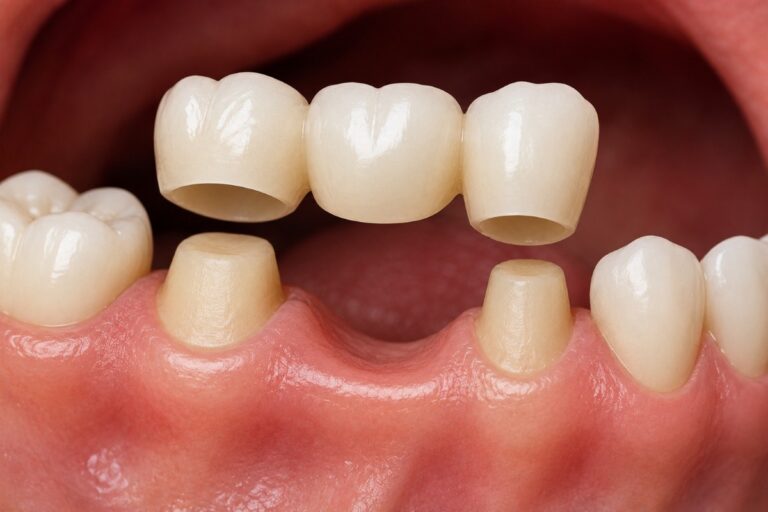
A traditional dental bridge restores a missing tooth by anchoring the replacement to the healthy teeth on either side of the gap. Those anchor teeth, called abutments, are fitted with crowns that support a pontic, the artificial tooth that sits in between. Impressions and lab fabrication are done carefully so the finished bridge feels natural when you’re eating or talking.
Patients exploring dental bridges in Laurel often want to know if a fixed bridge can really restore normal chewing function. In most cases, it can. Ceramic and porcelain bridgework is a common choice because it holds up well while still blending in with the surrounding teeth.
Implant-Supported Bridges and Multi-Tooth Replacement
Patients missing several teeth in a row, or who’d rather not rely on natural teeth for support, may be better candidates for an implant-supported bridge. Instead of anchoring to adjacent teeth, this type of bridge is secured to dental implants, which can also help preserve jawbone density that’s often lost after a tooth is removed.
Patients comparing tooth replacement options in Laurel often weigh removable prosthetics against more stable, fixed alternatives like an implant-supported bridge. This approach tends to distribute chewing forces more evenly and can hold up well for patients with larger gaps.
The Dental Bridge Procedure
The process typically starts with an evaluation of your surrounding teeth, gum health, and bite before any preparation begins. If you’re getting a traditional bridge, the abutment teeth are gently reshaped so the crowns fit securely. A temporary restoration is usually placed while your permanent bridge is being made.
Patients often ask how a new bridge will feel while eating or speaking. Getting the bite alignment right matters, since uneven pressure can put extra strain on the bridge and the teeth around it. We take the time during placement to check and adjust the fit so it feels comfortable from day one.
Long-Term Function and Bridge Maintenance
A bridge still needs regular care once it’s in place. Cleaning around and underneath the pontic is important, since plaque buildup near the abutment teeth can lead to decay or gum irritation. Patients who grind their teeth or have a heavier bite may need periodic monitoring to help protect the bridge from excess force.
At Laurel Smile Design, our bridge evaluations focus on restoring the missing tooth while supporting a comfortable, stable bite for the long run. If you’re dealing with a gap, shifting teeth, or chewing difficulty, it’s worth getting evaluated before it progresses further.
Schedule a Bridge Consultation
If a missing tooth is affecting your chewing comfort or bite stability, a consultation with Dr. Amna Choudhary can help determine whether a dental bridge is the right fit. Laurel Smile Design offers personalized bridge treatment aimed at restoring your smile and helping you chew comfortably again.
Call (301) 490-1700 or request an appointment online to get started.
Dental Bridge FAQs
1. What is a dental bridge?
A dental bridge is a fixed restoration that replaces one or more missing teeth. It uses crowns on the teeth (or implants) next to the gap to support an artificial tooth in between.
2. How long do dental bridges last?
Most dental bridges last between 5 and 15 years, and sometimes longer, depending on your oral hygiene and how often you keep up with dental visits.
3. Are dental bridges permanent?
Yes, bridges are considered a fixed, permanent restoration. They’re cemented onto the abutment teeth or implants and can only be removed by a dentist.
4. What’s the difference between a dental bridge and a dental implant?
A dental implant is a titanium post surgically placed in the jawbone to support a single replacement tooth. A dental bridge relies on the surrounding natural teeth (or implants) for support and doesn’t require surgery on its own. We can help you decide which option fits your situation best.
5. How much does a dental bridge cost?
Cost depends on how many teeth need replacing, the materials used, and whether the bridge is tooth- or implant-supported. Most dental insurance plans cover a portion of the cost, and we’re happy to walk through your options at your consultation.
6. How do I clean a dental bridge?
Brush it just like your natural teeth, and use floss threaders or a water flosser to clean underneath the pontic, where regular floss can’t reach.
7. Is getting a dental bridge painful?
The procedure itself isn’t painful since the area is numbed beforehand. You may notice some mild soreness for a day or two afterward, which typically responds well to over-the-counter pain relief.
8. What if my bridge feels loose or gets damaged?
Call our office right away if your bridge feels loose or damaged. Avoid chewing on that side and stick to softer foods until we can see you. Depending on the issue, we may recement, repair, or replace the bridge.
LAUREL SMILE DESIGN
To schedule your appointment
Use the form beside to provide us with the information, and our coordinator will contact you for convenient appointment times.
Office Hours
- Monday: 9am to 4:30pm
- Tuesday: 10am to 7pm
- Wednesday: 9am to 4:30pm
- Thursday: 10am to 7pm
- Friday: Closed
- Saturday: By Appointment Only
- Sunday: Closed