
5 Common Dental Concerns for Seniors and How to Prevent Them
As we get older, our bodies change, and our teeth and gums change too. Years of chewing, previous dental treatments, medications, and normal wear can affect our oral health. Because of this, seniors may be more likely to develop certain dental problems than younger adults. The good news is that many of these problems can be prevented with good daily habits and regular checkups with a trusted Dentist in Laurel, MD.
In this guide, the team at Laurel Smile Design explains five common dental concerns that seniors may face and simple ways to prevent them. With proper care, you can maintain healthy teeth and gums and enjoy a comfortable smile for many years.
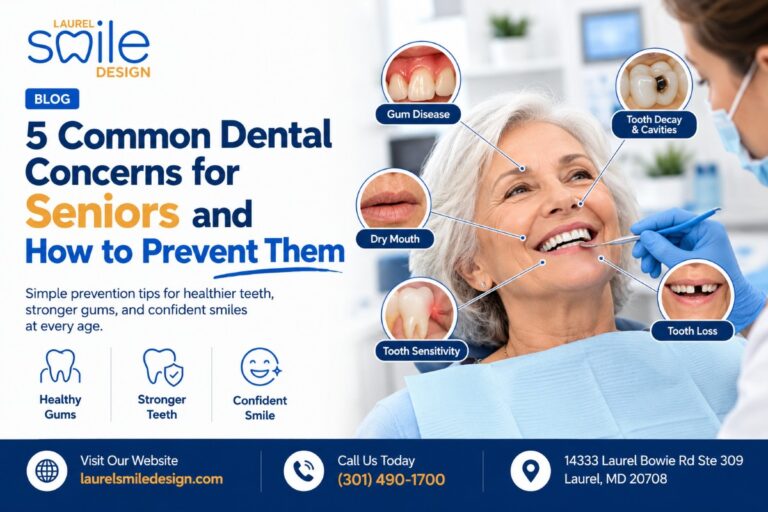
1. Dry Mouth (Xerostomia)
Dry mouth is one of the most frequent complaints among older adults, and it’s more than just an annoyance. Saliva plays a critical role in washing away food particles, neutralizing acids, and protecting teeth from decay. When saliva production drops, the mouth becomes a much more hospitable environment for bacteria.
Why it happens: Dry mouth in seniors is most often caused by medications over 400 common prescriptions, including those for blood pressure, allergies, and depression, list dry mouth as a side effect. Certain medical conditions, like diabetes or Sjögren’s syndrome, and reduced salivary gland function with age can also contribute.
Risks if left untreated: Chronic dry mouth increases the risk of cavities, gum irritation, bad breath, and difficulty chewing, swallowing, or speaking comfortably.
How to prevent it:
Stay hydrated throughout the day
Chew sugar-free gum or use saliva substitutes to stimulate moisture
Avoid excessive caffeine and alcohol, which can worsen dryness
Ask your doctor or dentist whether an alternative medication is available
Use a humidifier at night if dryness is worse while sleeping
If dry mouth is a persistent issue, mention it at your next visit, a simple conversation with your dental team can lead to relief and better protection for your teeth. Left unaddressed, chronic dryness can quietly accelerate decay over months or years, so it’s worth bringing up even if it seems like a minor inconvenience. Your dentist may also recommend prescription-strength fluoride rinses or specialized toothpaste formulated for dry mouth relief.
2. Tooth Decay and Root Cavities
Many people assume cavities are mainly a childhood problem, but seniors actually face a unique risk: root cavities. As gums naturally recede with age, the softer root surface of the tooth becomes exposed. Unlike the hard enamel that covers the crown of the tooth, roots have no such protective layer, making them far more susceptible to decay.
Why seniors are more prone:
Gum recession exposes vulnerable root surfaces
Dry mouth reduces natural cavity protection
Older dental restorations (fillings, crowns) can wear down or develop gaps over time
Warning signs: Tooth sensitivity to hot, cold, or sweet foods, visible dark spots near the gumline, or unexplained tooth pain.
Prevention tips:
Use a fluoride toothpaste or ask about a prescription-strength fluoride treatment
Limit sugary and acidic foods and drinks
Keep up with regular professional cleanings and exams, which catch decay early before it requires more invasive treatment
Consider fluoride varnish applications during dental visits for extra protection
Routine preventive care is the single most effective way to catch and stop root decay before it becomes a bigger and more expensive problem.
3. Gum Disease (Periodontal Disease)
Gum disease becomes increasingly common with age, and it’s one of the leading causes of tooth loss in older adults. It starts subtly, often with red, swollen, or bleeding gums (gingivitis), and if untreated, can progress to periodontitis, where the infection damages the bone and tissue supporting the teeth.
What makes gum disease especially important to address in seniors is its connection to overall health. Research has linked periodontal disease to an increased risk of heart disease, stroke, and complications with diabetes. Taking care of your gums isn’t just about your smile, it supports your whole-body health.
Prevention tips:
Brush twice daily with a soft-bristled brush, and don’t skip the gumline
Floss daily to remove plaque between teeth where a brush can’t reach
Schedule professional cleanings at least twice a year (or more frequently if you’re at higher risk)
Ask about a deep cleaning (scaling and root planing) if early signs of gum disease are present
Manage related health conditions like diabetes, which can worsen gum disease
Consistent home care paired with professional cleanings is the most reliable way to keep gum disease from progressing. It’s also worth noting that gum disease often develops painlessly in its early stages, which is why so many people don’t realize anything is wrong until a checkup reveals it. This is exactly why routine visits matter so much for older adults, small, early interventions can prevent much more serious treatment down the road.
4. Tooth Loss and the Need for Replacement
Tooth loss is unfortunately common among seniors, often resulting from a combination of decay, advanced gum disease, or simply years of wear. Beyond the cosmetic impact, missing teeth can make it harder to chew certain foods, affect speech clarity, and even cause remaining teeth to shift out of position over time.
Common causes:
Untreated tooth decay or root cavities
Advanced periodontal disease
Cracked or fractured teeth from years of use
Prevention starts with the issues above, treating decay and gum disease early is the best way to avoid losing teeth in the first place. But if tooth loss has already occurred, replacement options can restore function, comfort, and confidence:
Dental implants: a permanent, natural-looking solution that also helps preserve jawbone density
Bridges: fill gaps using neighboring teeth for support
Partial or full dentures: a removable option for replacing multiple missing teeth
A dental team that takes time to explain your options can help you choose the solution that fits your lifestyle, budget, and long-term oral health goals. Working with an experienced Dentist in Laurel, MD ensures you get an honest recommendation based on your specific needs, not a one-size-fits-all approach.
It’s also worth remembering that replacing missing teeth isn’t purely cosmetic, leaving gaps unaddressed can lead to bone loss in the jaw over time and put extra strain on your remaining natural teeth, making a timely conversation about replacement options an important part of long-term oral health planning.
5. Oral Cancer
Oral cancer risk increases with age, and early detection dramatically improves treatment outcomes. Seniors with a history of tobacco or alcohol use face a higher risk, though oral cancer can develop in anyone, including those with no obvious risk factors.
Warning signs to watch for:
Sores that don’t heal within two weeks
Red or white patches inside the mouth
Persistent lumps, thickening, or numbness
Difficulty chewing, swallowing, or moving the jaw or tongue
Prevention and early detection:
Attend regular dental checkups, which typically include an oral cancer screening
Perform occasional self-exams of your mouth, lips, and tongue
Limit tobacco and alcohol use
Protect your lips from sun exposure with SPF lip balm
Routine screenings are quick, painless, and one of the most valuable parts of a regular dental visit for older adults.
How Our Team Supports Senior Oral Health
At Laurel Smile Design, we understand that dental needs evolve with age, and we take the time to create a care plan that fits each patient’s unique situation. Led by Dr. Amna Choudhary and Dr. Sunny Choudhary, our team combines modern dental technology with a genuinely compassionate approach, explaining every recommendation in plain language so you feel informed and confident about your care.
We also know that convenience matters, especially for patients managing busy schedules or coordinating care for aging family members. That’s why we offer Saturday and after-work appointments, and we frequently schedule families together to save you time and hassle.
Whether you need a routine cleaning, help managing dry mouth, gum disease treatment, or you’re exploring tooth replacement options, our team is here to guide you every step of the way.
Protect Your Smile at Every Age
Most dental concerns that affect seniors, dry mouth, root cavities, gum disease, tooth loss, and oral cancer are manageable and often preventable with consistent home care and regular professional attention. Catching these issues early makes treatment simpler, less costly, and far less stressful.
If it’s been a while since your last checkup, or you’ve noticed changes in your oral health, don’t wait. Our team is here to help you protect your smile for the years ahead. We welcome patients of all ages and are proud to serve the Laurel, Maryland community with care that’s personal and thorough.
Ready to schedule your visit? Book an appointment today and take the next step toward healthier, more comfortable oral health because at Laurel Smile Design, and as your dedicated Dentist in Laurel, MD, your smile is always our priority.
LAUREL SMILE DESIGN
To schedule your appointment
Use the form beside to provide us with the information, and our coordinator will contact you for convenient appointment times.
Office Hours
- Monday: 9am to 4:30pm
- Tuesday: 10am to 7pm
- Wednesday: 9am to 4:30pm
- Thursday: 10am to 7pm
- Friday: Closed
- Saturday: By Appointment Only
- Sunday: Closed