
Orthodontics has seen a remarkable transformation in recent years with the integration of advanced dental technology. From how diagnoses are made to how treatments are carried out, these advancements have reshaped the patient experience and improved results. At Laurel Smile Design, the approach to orthodontic care includes the thoughtful use of modern tools that enhance precision, comfort, and efficiency. Whether it is a child preparing for their first set of braces or an adult exploring discreet options, today’s technology is making it easier to address a wide range of orthodontic needs.
Modern imaging systems allow dentists to understand the structure of teeth and jaws in greater detail, making treatment planning far more accurate. Patients now benefit from clear aligners that gently guide teeth into their proper positions without the appearance of traditional braces. Treatments that once took years to complete can now be shortened, and the level of comfort during orthodontic care has never been higher.
The entire orthodontic journey is now smoother, and patients are more engaged than ever in their care plans. As a respected provider of Orthodontics in Laurel, MD, Laurel Smile Design continues to embrace this evolution, always aiming to make every patient feel at ease while achieving their best smile.
A Digital Revolution in Orthodontics
Gone are the days when dental impressions meant biting into messy trays filled with uncomfortable putty. Digital scanners have completely changed how impressions are taken. At Laurel Smile Design, 3D digital scanning is now a standard tool. It captures highly accurate images of a patient’s teeth and bite within minutes. These scans are then used to design customized orthodontic solutions with pinpoint precision. This technology removes guesswork and significantly reduces the chance of errors in both diagnostics and appliance design.
Digital impressions also improve communication. Patients can now see a clear, real-time 3D model of their teeth on a screen. This visual aid allows the dentist to explain treatment options more effectively. When patients understand what is happening in their mouths, they become more involved and committed to their care plans. It also means faster turnaround times. Clear aligners or braces can be manufactured more quickly, so treatment begins sooner.
Another benefit of digital impressions is the ease of tracking progress. At every appointment, scans can be compared with earlier versions to evaluate movement. This real-time feedback helps the dentist make any necessary adjustments promptly. It also reassures patients, as they can literally see their smile taking shape.
The Rise of Clear Aligner Therapy
Clear aligners have emerged as one of the most requested orthodontic treatments, especially among adults and teens. These transparent trays fit snugly over teeth and gently move them over time. Unlike braces, they are removable, making it easier to eat, brush, and floss without restrictions. At Laurel Smile Design, aligner therapy is an integral part of modern orthodontic care.
The design process for aligners begins with those detailed 3D scans mentioned earlier. Using this data, a custom treatment plan is created using computer software that maps out the exact movement of each tooth. Patients can even see a simulation of their results before starting treatment. This level of visualization adds a level of excitement and motivation.
Each set of aligners is worn for a designated period before switching to the next set. They must be worn for most of the day, but they offer a level of flexibility that traditional braces cannot match. There are no wires to tighten or brackets to fix. Fewer appointments are needed, and the smooth plastic is more comfortable on the cheeks and lips.
Aligner therapy also works well for various cases, including gaps, crowding, overbites, and underbites. With the right plan and dentist oversight, results can be impressive and long-lasting.
From Planning to Practice
3D printing has opened new doors in orthodontics. It allows dental professionals to fabricate models, aligners, retainers, and other orthodontic appliances in-house and with great efficiency. At Laurel Smile Design, this technology plays a valuable role in the customization of treatment tools.
Before, it could take days or even weeks to receive a lab-made retainer. With 3D printing, it may only take hours. The accuracy is outstanding, and the speed means patients are not kept waiting. This rapid production is especially helpful when a retainer is lost or damaged, as a replacement can be created promptly without disrupting treatment.
3D-printed models also assist in treatment planning. Dentists can review the structure of a patient’s teeth and jaw in real space. This leads to better decision-making and enhances results. It also allows dentists to test the fit of appliances beforehand, improving comfort and functionality.
These printed appliances are made from safe and durable materials designed to last the entire treatment duration. They are lighter and more comfortable than older versions, which enhances patient satisfaction.
Accurate Diagnostics
Cone Beam Computed Tomography, or CBCT, is another game-changer in orthodontics. Unlike traditional dental X-rays, which offer a two-dimensional view, CBCT provides a full 3D image of a patient’s dental anatomy. This includes bones, teeth, roots, nerves, and even airway passages.
At Laurel Smile Design, CBCT is used to evaluate complex cases. It gives detailed insight into jaw alignment, bone density, and potential obstacles to treatment. This level of detail allows the dentist to plan with confidence, especially when surgical orthodontics or extractions are being considered.
CBCT imaging also plays a role in assessing facial symmetry, growth patterns in children, and identifying hidden infections. It is a valuable resource that supports safer and more effective treatment.
Although the scan is quick, the data it provides is immense. Patients benefit from this depth of information because it ensures every step of their orthodontic journey is backed by a clear understanding of their unique dental structure.
Artificial Intelligence in Treatment Planning
Artificial Intelligence (AI) is being used in orthodontics to help analyze data, predict outcomes, and improve treatment accuracy. With software powered by AI, dentists can simulate various treatment options and forecast how teeth will move in response to different forces.
At Laurel Smile Design, AI-based tools support the planning phase by offering smart suggestions based on thousands of previous successful treatments. This helps the dental team craft efficient, personalized plans. AI also plays a role in the development of aligners, guiding their design to match the treatment blueprint.
Patients gain the benefit of shorter treatment durations, more accurate predictions, and fewer refinements. Since AI continues to learn from new data, it constantly improves its accuracy and capabilities. The result is a smarter, more responsive orthodontic experience.
AI is not replacing the dentist but assisting in the decision-making process. It acts as an advanced assistant, sorting through complex data and providing valuable insights that can guide better outcomes.
Accelerated Orthodontics for Faster Results
Many patients are eager to shorten the time they spend in orthodontic treatment. Advances in technology have made that goal more realistic. Techniques such as micro-vibrations, low-frequency pulses, and specialized devices are being used to stimulate bone remodeling. This can speed up tooth movement without compromising safety or comfort.
These devices, when used under supervision, may reduce treatment time by several months. They also promote better results by allowing teeth to shift more predictably. Laurel Smile Design explores these options when appropriate, especially for motivated patients who want to achieve their goals faster.
It is important to note that while speed is desirable, safety always comes first. Not every case is a good fit for accelerated orthodontics. However, when it is a match, the difference can be significant. Patients appreciate not just the faster timeline but the feeling that their treatment is progressing efficiently.
Teledentistry and Virtual Monitoring
Orthodontic care is now more accessible thanks to teledentistry. Through secure video consultations and digital updates, patients can stay connected with their dentist without visiting the office for every check-in.
At Laurel Smile Design, this flexibility supports patients with busy schedules or those who travel frequently. With virtual monitoring, patients send images or scans of their teeth at regular intervals. The dentist reviews these updates and advises whether adjustments are needed. This helps keep treatment on track without unnecessary delays.
Virtual care also improves convenience. Patients receive guidance without disrupting their daily routine. It is not a full replacement for in-office visits but a helpful tool that adds flexibility and responsiveness to the orthodontic process.
Soft Tissue Lasers for Gentle Adjustments
Some orthodontic cases require soft tissue management. Whether it involves removing extra gum tissue, exposing a tooth that has not erupted, or improving gum symmetry, soft tissue lasers have become the preferred tool.
These lasers offer precision with minimal discomfort. Unlike traditional surgical tools, lasers cause less bleeding, reduce healing time, and often eliminate the need for sutures. The dentist can target a very specific area without affecting nearby tissues.
At Laurel Smile Design, soft tissue lasers enhance patient comfort and treatment results. They are especially helpful in cases where aesthetics matter, such as when improving the appearance of the gumline during or after orthodontic treatment.
This technology allows procedures to be performed in a calm, controlled manner, often with faster recovery and less anxiety for patients.
Improved Materials for Brackets and Wires
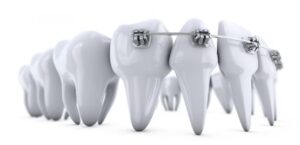
For patients who choose traditional braces, technology has not been left behind. Brackets and wires today are lighter, more durable, and more effective than those of the past. Materials such as nickel-titanium allow wires to retain their shape better, applying constant and gentle pressure to teeth. This leads to smoother tooth movement and fewer adjustments.
Brackets have become smaller and more comfortable. Self-ligating brackets are also available, which use a slide mechanism instead of elastic ties. This reduces friction and can shorten treatment time. These innovations make braces more efficient and more comfortable for patients of all ages.
At Laurel Smile Design, the materials used are chosen with care, always keeping the patient’s comfort and success in mind.
A New Era of Patient Experience
Technology has transformed not only how orthodontic care is delivered but also how patients experience it. From scheduling appointments online to receiving text reminders and educational videos, every interaction has been improved. The use of digital tools creates a smoother, more responsive journey from start to finish.
Patients now feel more informed, more involved, and more comfortable. With access to clear visuals, accurate timelines, and ongoing support, orthodontic treatment becomes less of a challenge and more of a shared effort between dentist and patient.
At Laurel Smile Design, this modern approach reflects a genuine commitment to helping every patient achieve a smile that is both healthy and confident.
Conclusion
The role of technology in orthodontics is more than just a trend—it is a transformation that continues to shape better outcomes, greater comfort, and increased convenience for every patient. At Laurel Smile Design, the use of digital imaging, AI planning, aligner systems, 3D printing, and virtual care all combine to provide a thoughtful orthodontic experience. These tools are used to support clinical expertise, not replace it, and the result is more effective treatment delivered with confidence and clarity. Whether you are interested in traditional braces or modern aligners, the future of orthodontic care is already here, and it is making a real difference in how patients smile. For trusted Orthodontics in Laurel, MD, schedule your consultation today with a caring Dentist in Laurel MD at Laurel Smile Design and begin your journey to a better smile with the help of the latest in dental technology.