
Many people love drinking soda because it tastes great and gives instant refreshment, but most don’t realize how harmful it can be for their teeth. Soda contains high levels of acids and sugars that directly attack the protective outer layer of your teeth, known as enamel. Once this enamel becomes weak, your teeth become vulnerable to sensitivity, cavities, pain, and even breakage. The biggest problem is that enamel does not grow back, which means once damaged, it cannot fully repair itself.
When you sip soda frequently, the acid sits on your teeth and slowly softens the enamel. Sugar in soda also feeds bad bacteria in your mouth, which leads to more acid production. This creates a continuous cycle of damage. The longer-lasting exposure makes the situation worse than occasional consumption. That is why many people who regularly drink cola, soft drinks, or energy drinks often complain of sensitivity or dull, yellowish teeth. A trusted Laurel Dentist will always advise controlling soda consumption to protect your smile for the long term.
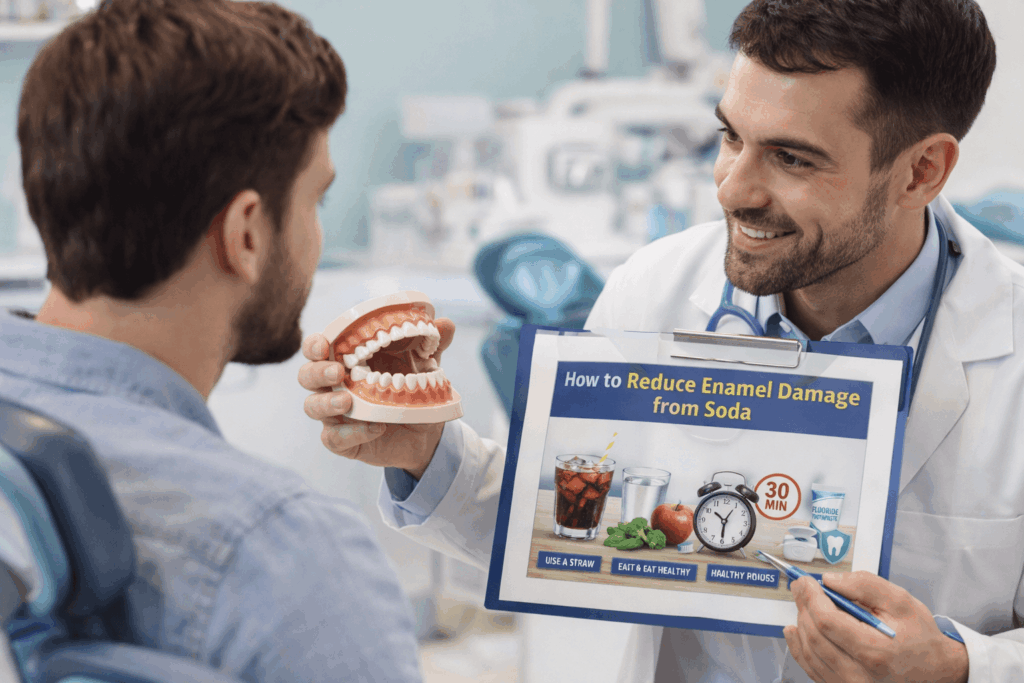
How can you enjoy soda without causing severe enamel damage?
Completely quitting soda may not be easy for everyone, especially if it is part of your daily lifestyle. However, you can still reduce enamel damage with some smart habits. One of the most effective ways is to limit how often you drink it. Instead of sipping throughout the day, try to drink soda occasionally and preferably with meals. This reduces the amount of time acid stays on your teeth.
Another helpful tip is to avoid holding soda in your mouth or swishing it around, because this increases direct contact with enamel. Drinking quickly instead of slowly helps reduce exposure time. If you want to be even safer, you can use a straw. This allows the drink to bypass most of your teeth and go straight into your throat, minimizing enamel contact. Every small habit change can play a big role in reducing soda-related tooth damage, and your Dentist in Laurel will always recommend mindful drinking practices.
Why is drinking water after soda so important for your teeth?
Many people don’t realize how powerful water can be in protecting their teeth. After drinking soda, the acids linger in your mouth and continue attacking enamel. Simply rinsing your mouth with plain water helps wash away some of the sugar and acid. This reduces the harmful environment inside your mouth and helps your saliva do its natural job of neutralizing acids.
Water also keeps your mouth hydrated, which supports saliva production. Saliva is one of the body’s best natural defenses against enamel erosion because it helps rebuild minerals and maintain a healthy pH level. If you are someone who drinks soda regularly, keeping a bottle of water with you can significantly reduce damage over time. Hydration is not just good for your body; it is essential for your oral health too.
Should you brush your teeth immediately after drinking soda?
Many people think brushing right after soda is the best idea, but it can actually do more harm than good. When you drink soda, your enamel becomes temporarily softened by acid. Brushing during this time can scrub away this weakened enamel layer, leading to faster erosion. Instead of protecting your teeth, it can speed up the damage.
Dentists recommend waiting at least 30 minutes before brushing after drinking soda. During this time, your saliva works to neutralize the acid and strengthen the enamel again. If you want to freshen your mouth immediately, rinsing with water or using fluoride mouthwash is a much safer option. Later, you can brush gently using a soft-bristle toothbrush and fluoride toothpaste to support enamel strength. A professional Laurel Dentist can guide you on the right brushing habits based on your soda intake and oral condition.
How does fluoride help in protecting your enamel from soda damage?
Fluoride is one of the most important minerals for strong and healthy teeth. It works by remineralizing weakened enamel and making it more resistant to acid attacks. If soda has already started affecting your enamel, fluoride toothpaste, mouthwash, or professional fluoride treatments can slow down the process and strengthen your teeth again.
Regular use of fluoride toothpaste is recommended by dentists worldwide. If your enamel erosion is more severe, visiting a Dentist in Laurel like Laurel Smile Design is extremely important. They can recommend fluoride varnishes, gels, or professional treatments that provide deeper protection compared to regular toothpaste. Fluoride does not rebuild lost enamel completely but it greatly improves resistance, helps prevent cavities, and reduces sensitivity.
Can your diet and lifestyle choices reduce enamel erosion caused by soda?
Yes, your daily diet has a major impact on your enamel health. If soda is part of your lifestyle, balancing it with healthier choices can significantly reduce damage. Including calcium-rich foods such as milk, cheese, and yogurt helps strengthen enamel naturally. Crunchy fruits and vegetables like apples and carrots stimulate saliva production, which helps wash away acids.
Avoid pairing soda with other acidic foods like citrus fruits, vinegar-based snacks, or sports drinks at the same time, because this increases enamel erosion risk. Maintaining good oral hygiene is equally important. Brushing twice a day, flossing regularly, and visiting your Laurel Dentist for routine checkups ensure problems are detected early and treated before becoming serious.
When should you visit a dentist if soda has already affected your enamel?
If you regularly drink soda and notice signs like tooth sensitivity, discoloration, rough edges on your teeth, or frequent cavities, it is important to consult a Dentist in Laurel as soon as possible. Early treatment can save your enamel from further erosion and protect your smile. Dentists may suggest fluoride treatments, dental bonding, remineralization therapies, or other restorative procedures depending on your condition.
Even if you don’t feel pain, enamel erosion can still silently progress. That is why routine dental checkups are essential. Laurel Smile Design provides personalized dental care, helps you understand your enamel condition, and guides you toward healthier habits while ensuring your smile stays bright and strong.
FAQs – Questions Patients Commonly Ask About Soda and Enamel Damage
1. How often is it safe to drink soda without harming my enamel?
Occasional soda consumption is generally less harmful than daily intake. Limiting soda to rare occasions and drinking water afterward can reduce enamel erosion. However, completely avoiding soda is always the safest choice for your teeth.
2. Does diet soda also damage enamel the same way?
Yes, diet soda may contain less sugar, but it still has high acid levels. These acids are strong enough to wear down enamel, meaning diet soda can still damage your teeth.
3. Can enamel grow back once damaged by soda?
Unfortunately, enamel does not regrow once lost. However, early enamel weakening can be strengthened with fluoride and proper dental care to prevent further damage.
4. Why do my teeth feel sensitive after drinking soda?
Sensitivity happens because soda weakens enamel and exposes the inner layers of the tooth. This allows hot, cold, or sweet foods to trigger discomfort.
5. Can visiting a Laurel Dentist really help with enamel damage?
Absolutely. A professional Laurel Dentist can evaluate enamel erosion, provide preventive treatments, restore damaged teeth, and help you develop better oral care habits to protect your smile.
Final Thoughts
Soda can be a tempting part of your daily routine, but frequent consumption without proper care can lead to enamel erosion and long-term dental problems. By following the tips provided by Laurel Smile Design, you can enjoy soda in moderation while protecting your smile. Remember to maintain good oral hygiene, eat enamel-strengthening foods, and visit a Dentist regularly. Small changes in your habits today can ensure a healthy, confident smile for years to come.